
By Heather Thompson | Structured Literacy Specialist, UFLI & IMSE Trained | Thompson Literacy & Learning
“You don’t need a curriculum, a subscription, or a special app. One of the most powerful literacy tools available to every single family is completely free — and it fits in a bedtime routine.”
It Sounds Simple Because It Is
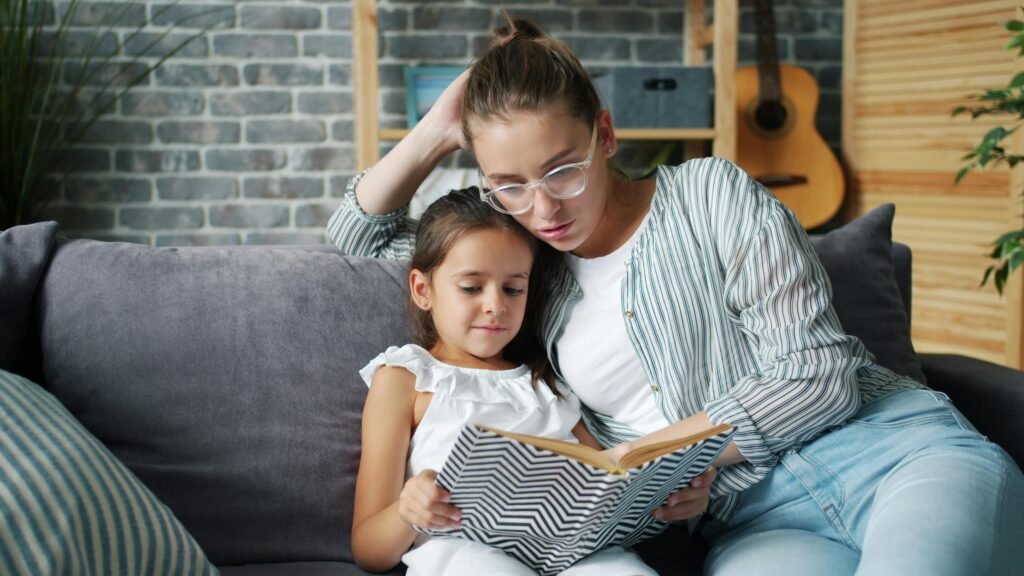
Reading aloud to your child is not a new idea. You have probably heard it before. But what most parents do not fully understand is why it is so powerful — and just how much it is doing for your child’s brain every single time you do it. Reading aloud to your PreK through 2nd grader is not just a cozy habit. It is one of the highest-impact literacy interventions available, and the research behind it is overwhelming. When you read aloud to a child, you are doing something no flashcard, app, or worksheet can replicate. You are building the architecture of a reader.
What Happens in the Brain During Read-Aloud?
When you read aloud to your child, their brain is working hard even though it does not feel that way. They are hearing vocabulary words far above their own reading level, which is how children build the rich word knowledge that fuels comprehension later. They are learning how stories and informational texts are organized, which helps them make sense of what they read independently. They are hearing what fluent, expressive reading sounds like, which gives them an internal model to aim for. And perhaps most importantly, they are building a deep emotional connection to books and reading — a love of stories that no worksheet can manufacture and no test can measure.
Reading Aloud Works Even After Your Child Can Read Independently
This surprises many parents. Once a child starts reading on their own, the instinct is to step back and let them practice independently. And independent reading is absolutely important. But reading aloud remains one of the most powerful things you can do well into the elementary years and beyond. A child’s listening comprehension far exceeds their reading comprehension for many years. That means that books you read aloud to them are opening doors to vocabulary, ideas, and story structures that they simply cannot access yet on their own. You are pulling them forward. You are showing them what reading can be.
How to Make Read-Aloud a Daily Habit
The most important thing about reading aloud is consistency — not perfection. Ten minutes every day is far more powerful than an hour once a week. Bedtime is a natural fit for many families, but morning routines, car rides, and lunch work just as well. Choose books that are slightly above your child’s independent reading level so they are being stretched. Let your child choose sometimes — ownership builds motivation. Use different voices for characters. Stop and wonder aloud about what might happen next. Ask questions, but keep it conversational and light. The goal is for your child to associate reading with warmth, connection, and enjoyment — because that association is what creates lifelong readers.
What to Read Aloud
The best books to read aloud are ones that genuinely interest your child. Fiction, nonfiction, poetry, picture books, chapter books — all of it counts. For PreK and kindergarten, picture books with rich language and repeating patterns are wonderful. For 1st and 2nd graders, beginning chapter books like the Magic Tree House series or Mercy Watson open up a whole new world of story. Your local library is a completely free and endlessly rich resource — and librarians are extraordinary at matching children with books they will love. Do not underestimate the power of a child who chooses their own book and cannot wait to find out what happens next.
How Reading Aloud Connects to Our Sessions
At Thompson Literacy & Learning, I always recommend daily read-aloud as a home practice alongside our structured literacy sessions. Here is why: the decoding and phonics skills we work on in sessions are the engine, but vocabulary, comprehension, and love of reading are the fuel. Read-aloud fills that tank every single day. Families who make read-aloud a consistent habit alongside our sessions see faster progress, stronger comprehension, and children who are genuinely excited about reading. It is one of the most important things you can do between our sessions. For more ways to support your reader at home, read The Summer Slide: What It Is and How to Stop It and What Is Phonemic Awareness and Why Does It Matter for Early Readers.
Start Tonight
You do not need to wait for the perfect moment or the perfect book. Pick up whatever is nearby, sit next to your child, and read aloud for ten minutes tonight. That is it. That is the whole assignment. And if you keep doing it — night after night, book after book — you will be giving your child one of the greatest gifts a parent can offer: a childhood full of stories and a heart that loves reading.
Let’s Keep Growing Together